December puts your HVAC system through more mood swings than any other month. One hour it’s warming the house, the next it’s cooling down rooms packed with guests and ovens running at full force. Your thermostat becomes a negotiation tool, your indoor humidity rises and falls without warning, and your A/C drain line quietly absorbs the consequences.
What many homeowners never realize is that these rapid shifts create the perfect setup for moisture trouble. By the time the new year rolls in, you may be dealing with leaks, ceiling stains, or mystery puddles.
Let’s look at how these winter mixed-mode cycles affect your drain line and what you can do to keep things under control.
Why December Creates Wild Moisture Swings
Holiday gatherings change your home’s environment in a way that regular weekdays don’t. Between constant cooking, extended showers, dishwashing, and more people breathing indoors, humidity rises fast. Your HVAC system has to manage that extra moisture, even if it’s not in cooling mode all day.
When your system switches between warm and cool cycles, condensation can develop in bursts. This moisture travels to the drain line, where leftover buildup from summer and fall may already be sitting. These shifts create surges that push debris around, forming clogs that slowly worsen as the month goes on.
How Mode Switching Affects Your Drain Line
Most homeowners think of the drain line as only an A/C-season concern, yet winter mode-switching makes it one of the most vulnerable parts of the system.
When warm air meets cold coils, sudden condensation develops. The water flows into the pan, then down the line. But if your system turns warm again minutes later, the water stops moving and begins to settle. These short cycles allow residue to thicken.
Dust from holiday decorations, attic activity, and increased airflow adds even more material to the line. By mid-December, you may have the start of a blockage forming.
Without attention, that blockage becomes a fully clogged channel. That’s when January surprises begin.
Why Post-Holiday Leaks Happen in Early January
The most common leak stories start the same way. Everything in December seemed fine. No puddles. No dripping. No strange sounds. Then in January, a ceiling discoloration appears, or the system’s safety float switch shuts down the unit.
This delay happens because winter clogs rarely form all at once. They build slowly during the lighting of ovens, arrival of guests, and temperature shifts. By the time the clog becomes complete, your system may be running fewer cycles, which makes the problem harder to notice.
Once heating cycles start drying out the air in January, the little moisture that still accumulates has nowhere to go. It backs up into the pan and finds the nearest escape route. Often, that’s drywall.
What You Can Do to Prevent a Post-Holiday Drain Line Mess
The safest approach is to address your drain line before holiday chaos sets in. Clearing out residue and buildup removes the risk of moisture surges hardening inside the line.
It also helps to monitor humidity with a basic gauge, especially during gatherings. If your home hits high humidity levels repeatedly, you’ll want to give the system time to run a longer cycle later to move moisture through the line.
Regular checks of the condensate pan for standing water are useful, too. Any pooling during winter indicates a blockage forming. Acting early avoids the slow winter backup that leads to ceiling repairs.
Our Take: Keep Your Drain Line Strong Through December
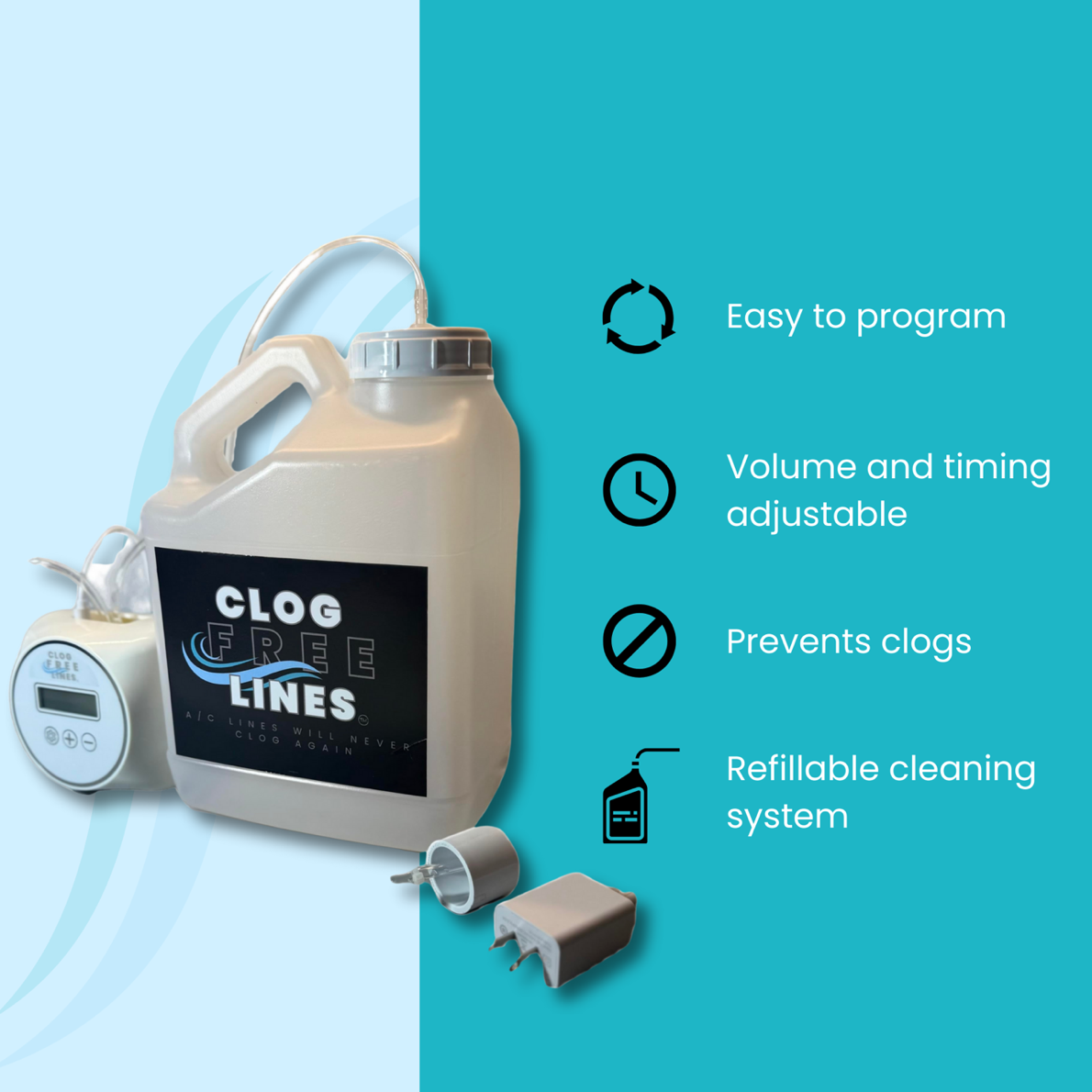
If you want to keep your HVAC system steady through nonstop December mode switching, we can help. When your home fills with guests and humidity starts climbing, a clean line becomes your best protection against leaks. As you approach the holidays, it’s smart to use an HVAC drain line cleaner.
Reach out to us today and stay leak-free through winter.