Houston homeowners know that March marks the unofficial start of A/C season. You might be tempted to flip the switch and hope for the best, but turning on your system after months of inactivity without a proper inspection can lead to unexpected problems. Early-season breakdowns, unusual noises, and poor cooling efficiency are all common pitfalls. Taking the time to inspect key components before full-time use ensures your A/C runs smoothly and efficiently while preventing costly repairs down the line.
Many issues aren’t immediately obvious. One of the most overlooked areas is the condensate drain line, which silently carries moisture away from your system. If this line is partially clogged, algae or debris can build up over the winter, leaving your air handler struggling to remove humidity. This can reduce cooling performance, cause water to back up, and even trigger safety shutoffs that turn your system off unexpectedly.
Key Areas to Inspect
Before you switch your A/C back on, check the following:
- Air Filters:Dust and debris can accumulate over the winter months. Replacing or cleaning filters improves airflow and reduces strain on your system.
- Thermostat Settings:Ensure your thermostat is set correctly and functioning. Consider upgrading to a programmable or smart thermostat for better control over seasonal fluctuations.
- Air Vents and Registers:Make sure nothing is blocking airflow. Furniture, drapes, or dust buildup can reduce efficiency.
- Outdoor Unit:Remove debris, leaves, or dirt from the condenser. Ensure the area around the unit is clear for proper airflow.
- Refrigerant Lines:Check for visible leaks or damage. Low refrigerant can reduce cooling performance and increase energy usage.
- Drain Line:Inspect for visible clogs, slow drainage, or signs of algae. A blocked drain line can lead to water damage, frozen coils, and higher energy consumption.
Even a small obstruction in the drain line can have a significant impact on system efficiency, comfort, and utility costs.
How the Clog Free Lines System Helps
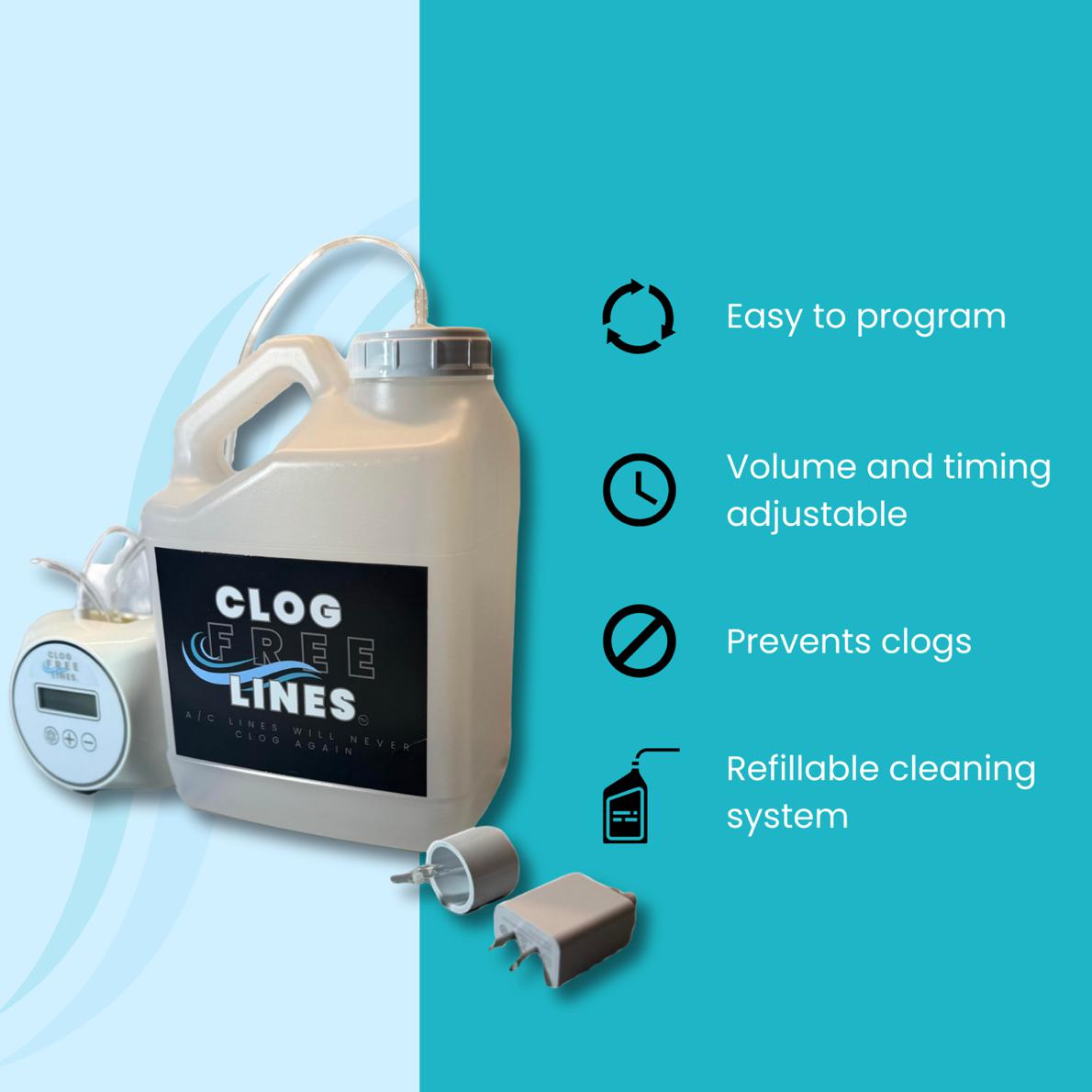
For homeowners who want a hands-off approach to maintaining a clear condensate line, the Clog Free Lines system is a game changer. This automated device attaches to your primary drain line and releases a measured dose of maintenance agent each month, keeping algae, slime, and debris from building up. With this system in place, water flows freely from the air handler, reducing the risk of backups, water damage, and A/C strain.
The Clog Free Lines system works year-round, so once your system is checked and cleared for the season, it continues to protect your drain line automatically. This minimizes surprises, improves humidity control, and ensures your system operates efficiently from the first warm day of the year.
Why Early Inspections Save Time and Money
Skipping a pre-season inspection can lead to emergency service calls, unexpected repairs, and higher energy bills. By checking your system carefully and addressing hidden issues like a clogged drain line before they escalate, you can prevent mid-season failures. Proper preparation keeps your home comfortable, extends the life of your equipment, and reduces unnecessary stress on both your A/C and your wallet.
Stay Ahead This Season
We recommend taking the time now to inspect every component of your system, including filters, vents, refrigerant lines, and especially the condensate drain line. Installing the Clog Free Lines system is one of the most effective steps we use to prevent clogs and maintain optimal airflow and humidity control throughout the season. By combining this proactive device with a thorough A/C inspection, we help homeowners enjoy a reliable, energy-efficient, and comfortable home from the very first warm day.
Review our installation guide and let us help you get your system ready for Houston’s early heat.