You walk past your indoor air handler and notice a small puddle forming in the drain pan, or worse, water spreading across the floor. Spring in Houston brings warm, humid air, and while your A/C is supposed to handle moisture effortlessly, pooled water near the unit is a sign that something isn’t working as it should. Ignoring it can lead to hidden water damage, mold growth, and costly repairs. Understanding why water collects around your indoor unit is key to protecting both your home and your comfort this season.
Water around your A/C is rarely random. The system is designed to remove condensation that forms as warm air passes over the evaporator coil. Normally, this water flows smoothly through the condensate drain line to the exterior or a nearby plumbing connection. When the line is partially blocked by algae, slime, or debris, water can’t escape as intended, creating a backlog in the drain pan. Over time, even a small blockage can result in significant pooling, overflowing, and potential damage to ceilings, walls, and flooring.
Common Causes of Water Pooling
Several factors contribute to water accumulation near your air handler:
- Clogged Condensate Drain Line:The most frequent cause of standing water. Debris, slime, or algae buildup restricts water flow, leading to backup in the pan.
- Dirty or Frozen Evaporator Coils:Poor airflow and moisture retention can cause the coil to freeze and then thaw, dripping excess water into the pan.
- Improper Drain Line Slope:If the drain line isn’t angled correctly, water may not flow freely, even without clogs.
- Air Filter Issues:Dirty filters reduce airflow and cause excess condensation in the pan.
- High Indoor Humidity:Spring humidity can add extra moisture that the system struggles to manage, especially if the drain line is partially blocked.
Even minor pooling should not be ignored. Left unresolved, water can seep into surrounding areas, creating stains, mold, or structural damage.
How the Clog Free Lines System Protects Your Home
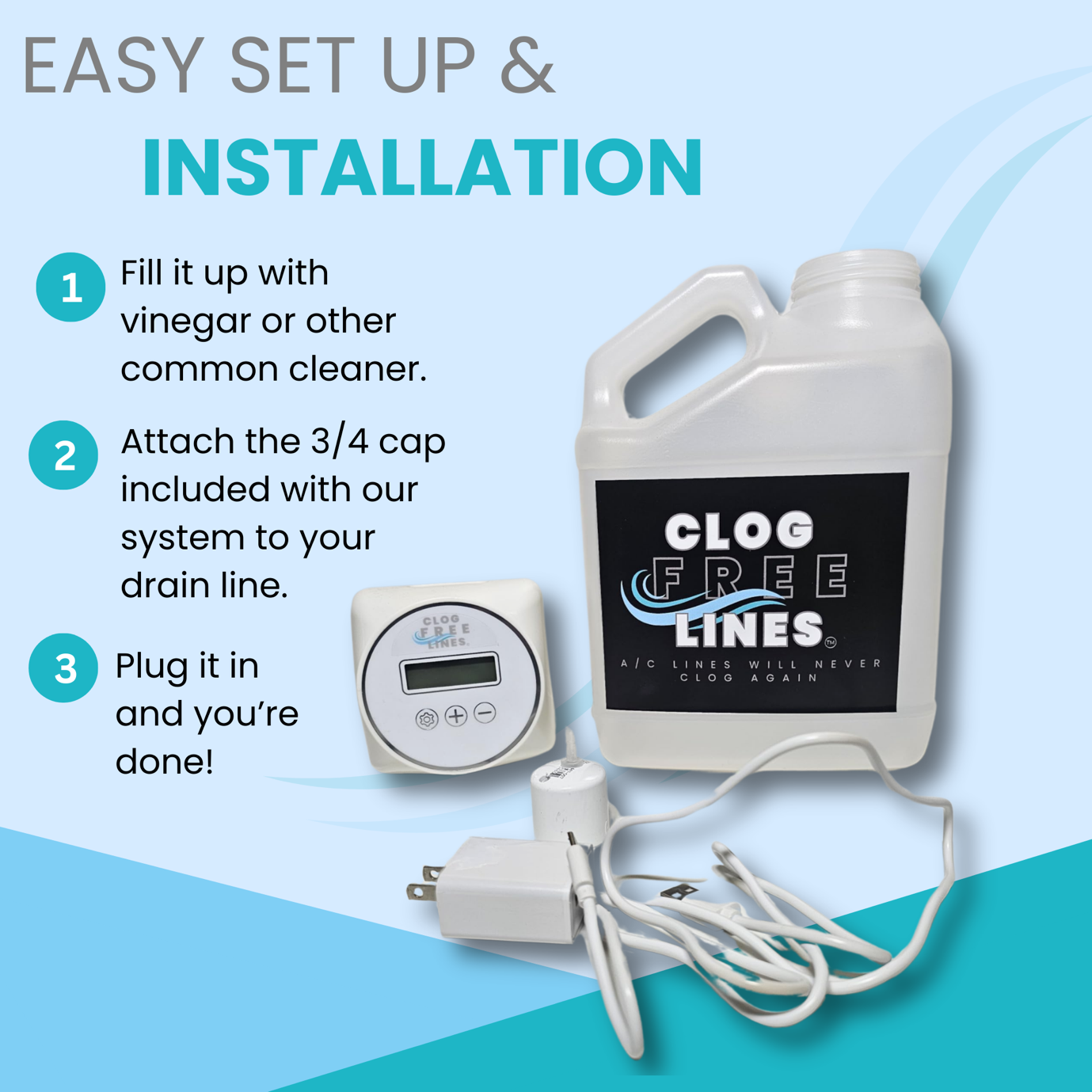
One of the most effective ways to prevent these issues is installing the Clog Free Lines system. This automated device attaches to your primary drain line and dispenses a measured monthly dose of maintenance agent that keeps the line clear from algae, slime, and other blockages. By ensuring water flows smoothly from the evaporator pan, the system prevents overflow, protects your home from water damage, and maintains proper humidity control.
The Clog Free Lines system works year-round, meaning once it’s installed, you don’t have to worry about seasonal clogging or sudden backups. For Houston homeowners, this is especially valuable during spring, when humidity levels can fluctuate and early-season heat puts additional strain on A/C systems.
Additional Steps to Prevent Water Issues
- Check and replace air filters regularly
- Inspect the drain line visually for signs of blockage or algae
- Ensure the pan is properly aligned and securely seated beneath the evaporator coil
- Keep the area around the indoor unit clear of debris to maintain airflow
- Schedule a professional inspection for pre-season maintenance to catch minor issues before they escalate
Keep Your Spring A/C Stress-Free
Water pooling around your A/C unit doesn’t have to be an unavoidable spring problem. Installing the Clog Free Lines system is one of the most reliable steps we take to prevent backups, clogs, and overflow. By protecting your drain line, maintaining proper moisture flow, and reducing stress on your A/C, this system helps keep your home comfortable, dry, and energy-efficient throughout the season.
Take action now; inspect your drain line, maintain your unit, and consider installing the Clog Free Lines system to enjoy a worry-free, cool, and dry home all spring and summer.
For more information on automated A/C drain line cleaning, give our team a call.